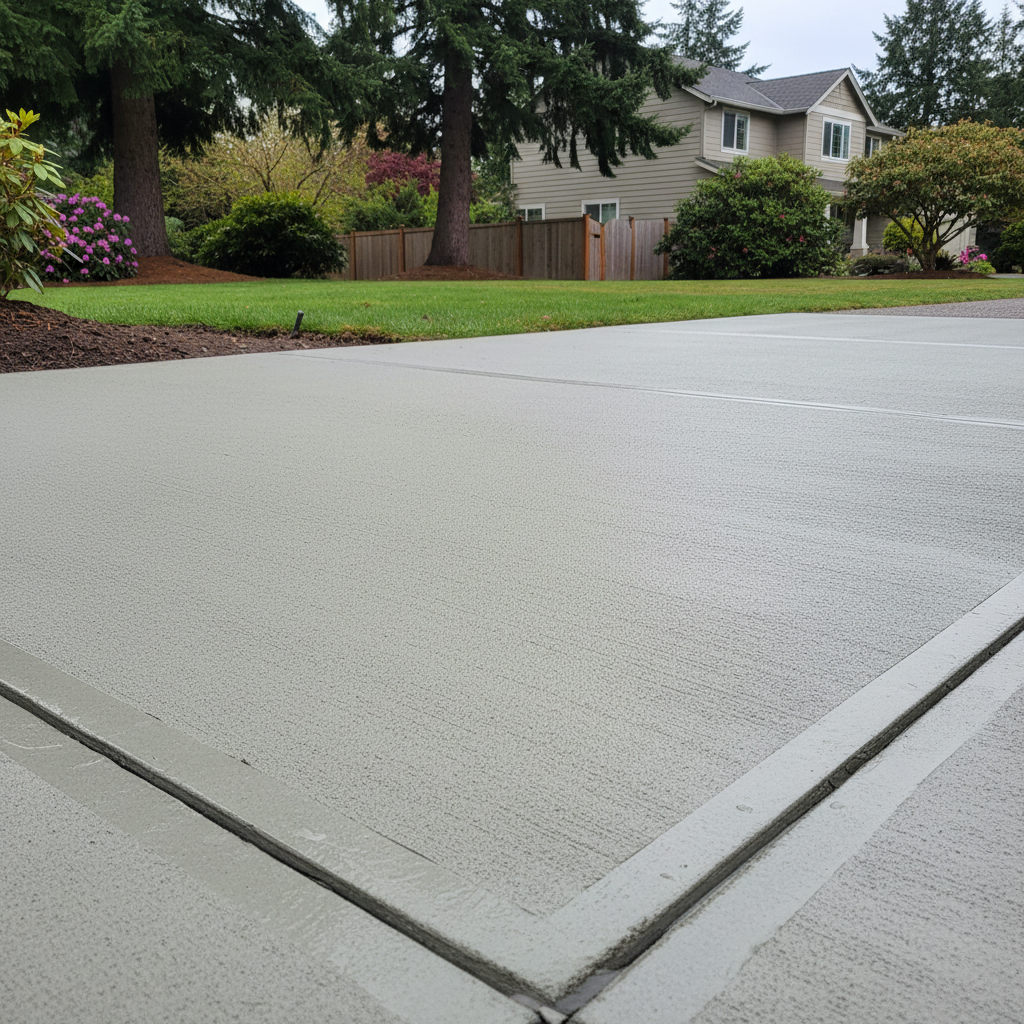
If you own a home around Finn Hill or down near the Slough, you already know how fast our local weather and giant evergreen roots can mess with flatwork. Sidewalks take a constant beating from wet soil cycles and heavy foot traffic. Homeowners ask Western Concrete Solutions many questions about concrete sidewalks in Kenmore, WA.
Why is my sidewalk cracking and sinking so soon?
Most of the time, it comes down to our native clay soil and water movement. When heavy winter rains saturate the ground, the soil expands. When things dry out in the summer, it shrinks. That constant shifting creates voids underneath the concrete slab. If the sub-base was not compacted properly with crushed rock when it was first poured, the slab will crack or sink into those hollow spots. Tree roots from mature maples and firs also exert massive pressure from below, lifting and snapping panels apart.
Can I just mudjack or foam-jack a sunken sidewalk panel, or do I need to replace it?
You can often save a sunken panel with slabjacking if the concrete is still structurally sound and free of major spiderweb cracks. Polyurethane foam injection works well for lifting panels back to grade when the underlying soil has washed away. However, if the slab is heavily cracked, crumbling at the edges, or severely damaged by massive tree roots, mudjacking is just a temporary fix. In those cases, breaking it out and pouring a fresh, properly reinforced section is the only way to fix the problem permanently.
Do I need a permit to replace a sidewalk on my residential property?
It depends entirely on whether your sidewalk sits strictly on private property or extends into the city right-of-way. If it is part of the public right-of-way along your street frontage, you will need to check with the City of Kenmore regarding standards and permits. Western Concrete Solutions always helps property owners figure out property lines and permitting requirements before any concrete gets broken out so you do not run into headaches with local code.
How thick should a residential concrete sidewalk be poured?
Standard residential sidewalks should always be poured at least four inches thick. If you have heavy foot traffic or a stretch where occasional vehicle or riding mower cross-over happens, bumping that thickness up to six inches with a compacted gravel base makes a huge difference. Skimping on depth or skipping the crushed rock base is a shortcut that leads directly to premature cracking during our freeze-thaw cycles.
How long do I need to keep people and pets off a new sidewalk?
You need to keep foot traffic off a fresh pour for at least 24 to 48 hours. Keep heavy loads, delivery carts, and pets off it for a full week. Even though concrete looks hard the next day, it only reaches about seventy percent of its structural strength in seven days, and hits its full strength around 28 days. Curing slow with a good moisture spray during the first few days gives you a much tougher walk.
How can I prevent tree roots from destroying my new sidewalk?
Root barriers installed alongside the sidewalk during construction help divert roots downward instead of letting them crawl right underneath your slabs. When Western Concrete Solutions preps a site surrounded by big trees, we also make sure to dig deep enough for a solid, thick aggregate base that gives roots less incentive to shallow-surface right beneath the concrete.