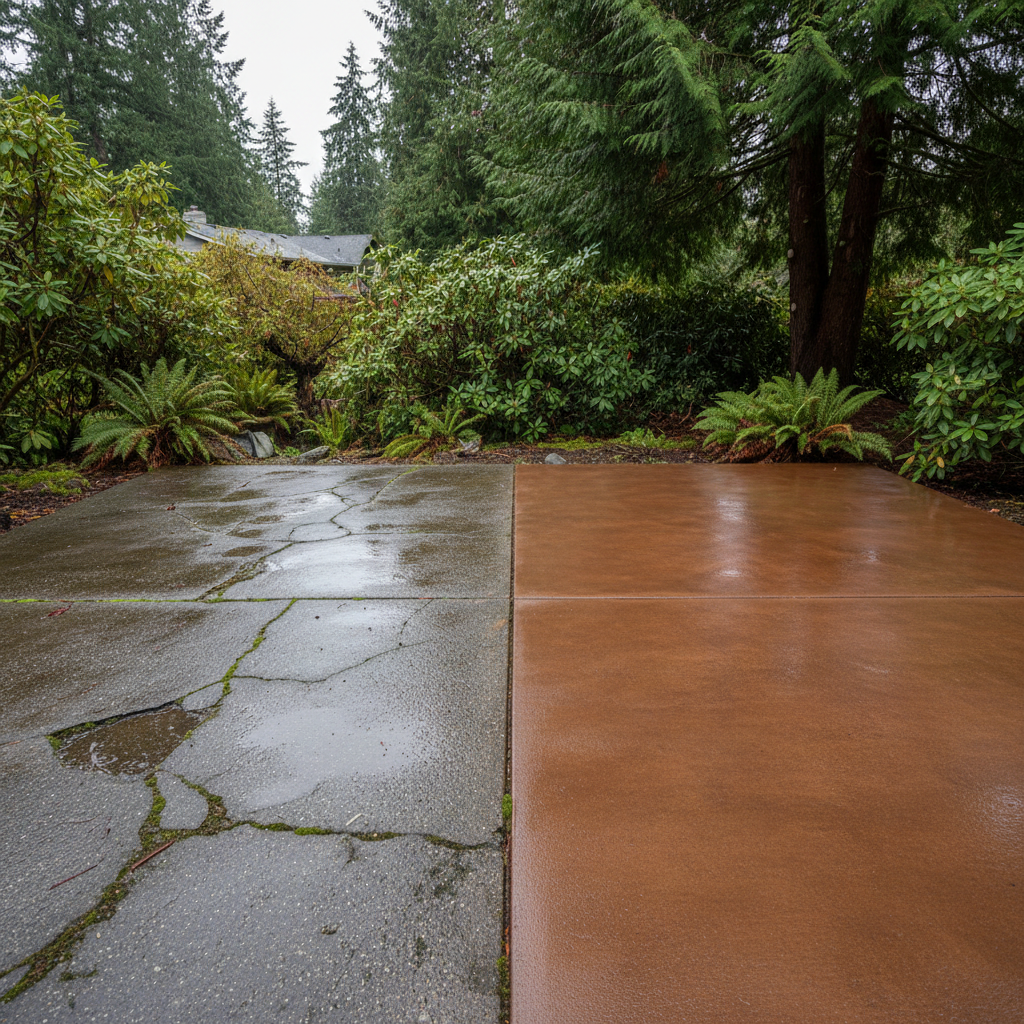
So, you're thinking about staining your concrete, huh? Smart move. It's a great way to spruce up an old patio, garage floor, or even an interior slab without ripping everything out. But when you start looking into it, you'll quickly find there are two big players in the staining game: acid-based stains and water-based stains. People ask me all the time which one's better, and honestly, there's no single 'best' answer. It really depends on what you're after, what kind of concrete you've got, and what you're willing to put into it.
Acid-Based Stains: The Classic Look
Let's talk about acid stains first. These have been around forever, and for good reason. They're basically a mix of metallic salts, hydrochloric acid, and water. When you put them on concrete, the acid reacts chemically with the lime (calcium hydroxide) in the concrete itself. This reaction creates a permanent, translucent color that's actually part of the concrete, not just sitting on top of it.
What's cool about acid stains is the look you get. It's often described as mottled, variegated, or marble-like. Think earthy tones – browns, tans, terra cottas, and some greens or blues. Because it's a chemical reaction, every slab takes the stain a little differently. You'll never get a perfectly uniform color, which is part of its charm. It gives your concrete a really unique, organic feel.
The Good and The Not-So-Good with Acid Stains:
- Durability: Super durable. Since the color is etched into the concrete, it won't chip, peel, or fade easily. It's practically part of the slab.
- Appearance: Rich, translucent, and natural-looking. Great for achieving an old-world or earthy aesthetic.
- Maintenance: Once sealed, it's pretty low maintenance. Just regular cleaning.
- Cost: Generally, the material cost for acid stain itself can be a bit less than some high-end water-based options, but application can be more involved.
- Color Palette: Limited. You're mostly sticking to those natural, earthy tones. Don't expect bright reds or vibrant blues.
- Application: This is where it gets tricky. Acid stains are corrosive, so you need to be careful with personal protective equipment and protecting surrounding surfaces. The concrete also needs to be super clean and free of any sealers, glues, or grease, because those will block the chemical reaction. And you've got to neutralize the acid after it's done its work, which adds another step.
- Predictability: Less predictable. The final color can vary significantly based on the concrete's age, porosity, and exact chemical composition. That's why I always do a test patch for clients, especially on older slabs common in places like the Northlake Terrace area, where concrete might have seen a lot of different conditions over the years.
Water-Based Stains: Modern Versatility
Now, water-based stains are a different beast. These are typically acrylic polymers with pigments suspended in water. Instead of reacting chemically, they penetrate the concrete's pores and deposit the color there. Think of it more like a very thin, translucent paint that soaks in rather than sitting on the surface.
The big advantage here is control. You get a much wider range of colors – pretty much any color you can imagine, from vibrant blues and greens to solid grays and blacks. And because it's not a chemical reaction, the color is generally more consistent and predictable. You can also layer them to create different effects.
The Good and The Not-So-Good with Water-Based Stains:
- Durability: Good, but relies more heavily on the sealer for long-term protection. If the sealer wears off, the color can eventually fade or wear with heavy traffic.
- Appearance: More uniform and consistent color. You can get opaque or translucent finishes. Excellent for modern or custom looks.
- Maintenance: Similar to acid stains, once sealed.
- Cost: Material costs can vary widely, from budget-friendly to premium options. Application is often simpler, which can save on labor.
- Color Palette: Huge. You're not limited to earthy tones.
- Application: Much easier and safer to apply. No corrosive acids, no neutralization step. Still needs clean concrete, but less finicky about contaminants blocking a chemical reaction. You can also often apply multiple coats to build up color intensity.
- Predictability: High. What you see in the sample is pretty close to what you'll get on your concrete, assuming proper prep.
So, Which One Should You Pick?
Alright, here's the deal. If you're after that classic, mottled, natural stone look, and you're okay with a more limited color palette and a more involved application process, acid stain is a fantastic choice. It's incredibly durable and gives a truly unique finish that you can't replicate any other way.
But for most folks, especially if you want more control over the color, a wider range of options, or a simpler application, I usually lean towards water-based stains. They're more forgiving, offer a modern aesthetic, and can still be incredibly durable with the right sealer. If you're looking to match a specific color scheme in your home or want something beyond browns and greens, water-based is definitely the way to go.
For outdoor concrete here in Kenmore, where we get plenty of rain and freeze-thaw cycles, a good quality sealer is absolutely critical no matter which stain you choose. It'll protect the color and extend the life of your concrete significantly. We always recommend a high-performance, penetrating sealer for maximum protection against our Pacific Northwest weather.
Ultimately, both can give you a beautiful result. It just comes down to your priorities. If you're still scratching your head, give us a call at Western Concrete Solutions. We can look at your specific project, talk through your vision, and help you figure out the best approach for your concrete.