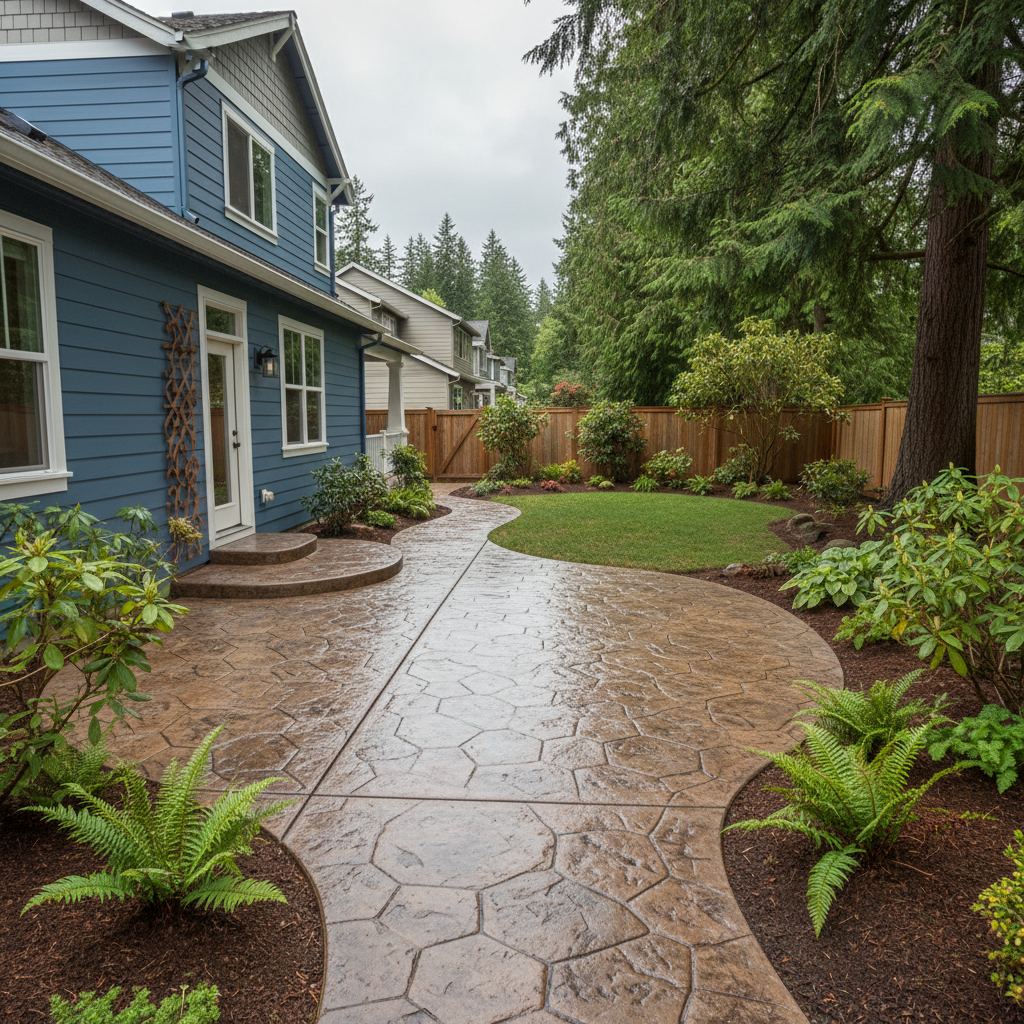
You need some concrete work done, maybe a new patio, a driveway repair, or a foundation for that shed you've been meaning to build. You start looking for contractors, and suddenly it feels like everyone's got a guy. How do you sort the pros from the clowns?
I've been pouring concrete around Kenmore for years with Western Concrete Solutions, and I've seen it all. Good work, bad work, and folks who just disappear with your deposit. Here’s what you need to know to protect yourself and get a solid job done.
Questions to Ask Every Concrete Contractor
Don't just ask for a price. Ask smart questions. This isn't a job interview for them, it's an interview for you to make sure they're the right fit.
Are you licensed, bonded, and insured in Washington State? This is non-negotiable. If they say no, or hem and haw, end the conversation. You can verify this yourself online with the state's L&I (Labor & Industries) website. I'll get to that.
How long have you been doing concrete work specifically? Not general construction, but concrete. It's a specialized trade. Experience matters a lot when it comes to getting a good finish and preventing cracks.
Can you provide recent references? And I mean recent. Not from five years ago. Talk to those people. Ask them if the job finished on time, on budget, and if they'd hire them again.
What kind of concrete mix do you typically use for this type of project? A good contractor will know the right strength (e.g., 3000 psi, 4000 psi) and any additives needed for our wet Kenmore weather, like air-entrainment for freeze-thaw protection.
How do you prepare the sub-base? This is huge. If they don't compact the ground properly, or lay down a good gravel base, your concrete will crack and settle. It's not a place to cut corners.
What's your warranty on the work? A reputable contractor will stand behind their work for at least a year, sometimes longer for structural stuff. Get it in writing.
Who will be doing the actual work? Your crew or subcontractors? It's good to know who's showing up on your property. If it's subs, ask if they're also licensed and insured.
What to Look For in a Quote
A quote isn't just a number. It's a detailed breakdown of what you're paying for. If it's just a single line item saying 'Concrete Patio - $X,XXX', that's a problem.
Detailed Scope of Work: It should clearly state what's included. Excavation, sub-base material, concrete thickness, PSI, finish type (broom, exposed aggregate, stamped), rebar or mesh, expansion joints, sealing, and cleanup. If it's not listed, assume it's not included.
Payment Schedule: A reasonable schedule is usually 10-20% upfront (for materials, permits), progress payments, and the final payment upon satisfactory completion. Anyone asking for 50% or more upfront should raise a red flag.
Permits: Who's responsible for pulling necessary permits? For bigger jobs, like a new driveway that impacts city right-of-way or a foundation, you'll need one. Make sure it's clear.
Cleanup: Will they remove all debris, including old concrete, dirt, and form boards? You don't want to be stuck with a huge mess.
Exclusions: What's not included? Sometimes this is as important as what is. For example, landscaping repair after the job might be on you.
Red Flags to Watch Out For
These are immediate deal-breakers in my book.
Door-to-door solicitations: Reputable contractors don't usually go knocking on doors looking for work. Especially if they claim to have 'extra concrete' from another job.
Cash-only deals: This is a classic move to avoid taxes and insurance. If they're not legit with the government, they won't be legit with you.
No written contract or vague contracts: Everything should be in writing. Period. Verbal agreements are worthless if something goes wrong.
High-pressure sales tactics: 'This price is only good today!' or 'I've got a cancellation, so I can do it cheap if you sign now.' Walk away.
Unlicensed or uninsured: I said it before, I'll say it again. This leaves you liable for injuries on your property or damage to your home.
Demanding full payment upfront: Never, ever do this.
How to Verify a Contractor's Legitimacy
This is easier than you think and it's your best defense.
Washington State L&I Website: Go to the Washington State Department of Labor & Industries website. They have a 'Verify a Contractor' tool. You can search by name or UBI number. This will tell you if their license is active, if they're bonded, and if they have current insurance. It'll also show any past infractions or claims against them. This is your first stop.
Better Business Bureau (BBB): Check their rating and read reviews. It's not the be-all and end-all, but it's another data point.
Online Reviews: Google, Yelp, Angie's List – take them with a grain of salt, but look for patterns. A few bad reviews aren't necessarily a deal-breaker, but a consistent stream of complaints about the same issue is.
Ask for their physical address: A P.O. Box isn't necessarily a red flag, but a legitimate business usually has a physical location or at least a consistent mailing address. If they're cagey about where they operate from, that's not a good sign.
Doing your homework upfront will save you a lot of headaches and money down the road. Don't rush the process. A good contractor will appreciate your thoroughness because it means you're serious about getting the job done right.