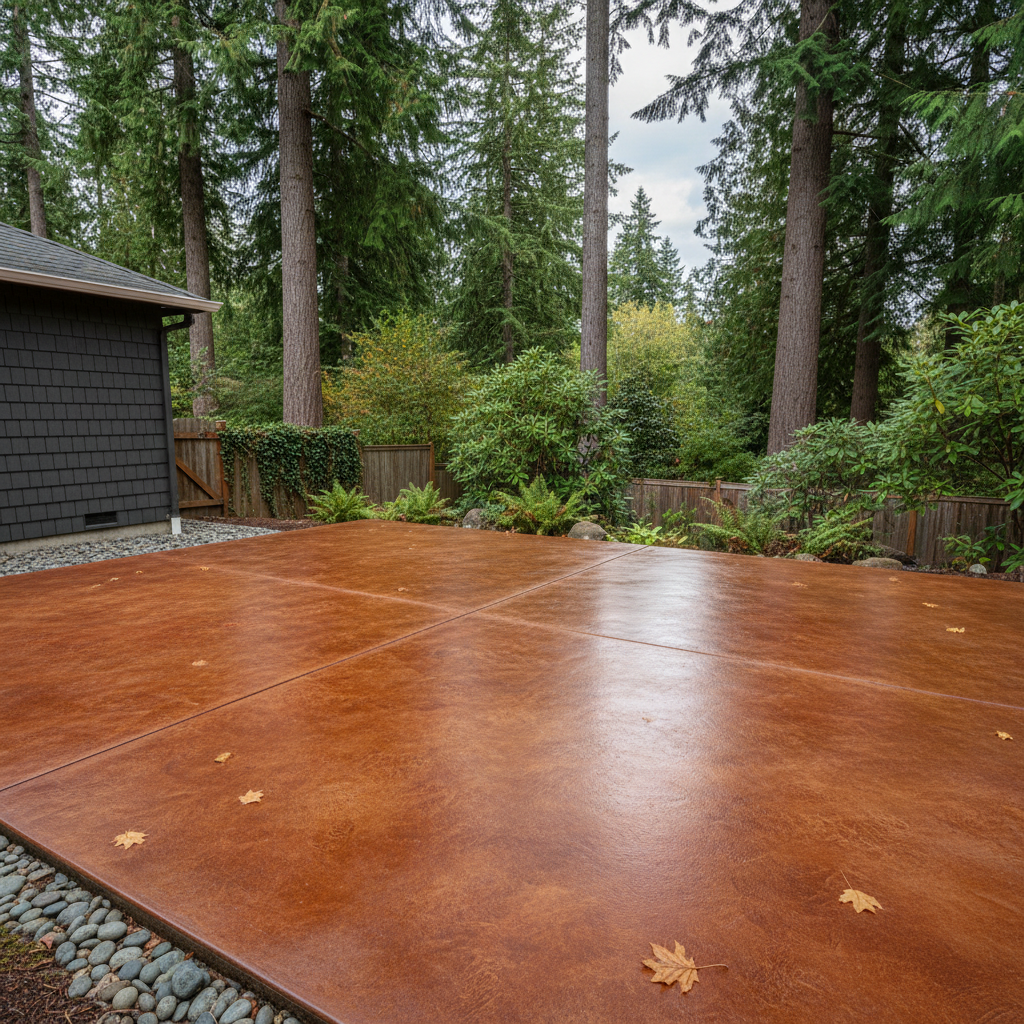
You've invested in stained concrete, whether it's a patio, a driveway, or an interior floor. It looks fantastic, right? That rich color and unique finish are what make it stand out. But like anything else, it won't stay that way forever without a little care. Especially here in Kenmore, with our wet winters and sometimes hot summers, you've got to be smart about protecting your investment. I've seen plenty of stained concrete jobs over the years, and the ones that last are the ones that get a bit of attention.
Extend the Life of Your Stained Concrete
The biggest thing you can do to extend the life of your stained concrete is to keep that sealer in good shape. Think of the sealer as the clear coat on your car; it protects the color underneath from UV rays, moisture, and wear and tear. Here in the Pacific Northwest, moisture is a constant battle. If water gets under that sealer, it can cause all sorts of headaches, from delamination to fading.
- Re-seal Regularly: For exterior surfaces, I generally recommend re-sealing every 2-3 years. If it's a high-traffic area, like a busy walkway or a driveway, you might need to do it every year. Interior floors usually last longer, maybe 5-7 years, depending on traffic.
- Protect from Heavy Objects: Don't drag heavy furniture or equipment across stained floors. Use felt pads on furniture legs. For exterior patios, lift planters instead of sliding them.
- Mind the Chemicals: Be careful with harsh chemicals, especially on interior floors. Things like bleach, ammonia, or strong degreasers can strip the sealer and even damage the stain itself. Stick to pH-neutral cleaners.
- Watch for UV Exposure: Even with a good sealer, prolonged direct sunlight can cause some fading over many years. If you have an exterior patio that gets blasted by the sun all day, consider an awning or umbrella to help protect it.
Regular Maintenance: What You Need to Do
Keeping your stained concrete clean is the easiest way to keep it looking its best. It's not rocket science, but consistency matters.
- Sweep or Vacuum Often: For interior floors, a quick sweep or vacuum gets rid of grit and dirt that can scratch the surface. For exterior, sweep away leaves, dirt, and debris regularly, especially before our rainy season really kicks in.
- Damp Mop: Use a damp mop with a mild, pH-neutral cleaner for interior floors. Don't use too much water; you just want to clean, not soak.
- Hose Down Exterior Surfaces: A good rinse with a garden hose is usually enough for exterior stained concrete. For tougher dirt, a soft-bristle brush and a mild detergent can work wonders. Just make sure to rinse thoroughly afterwards.
- Address Spills Immediately: This is huge. Oil, grease, wine, pet accidents – clean them up as soon as they happen. The longer they sit, the more likely they are to penetrate the sealer and leave a permanent mark.
Warning Signs of Trouble
You're not just looking for dirt; you're looking for signs that your concrete needs a little more than a wash. Catching these early can save you a lot of money and hassle down the road.
- Dull or Faded Areas: If your stained concrete starts looking dull, or the color seems to be fading in spots, especially in high-traffic areas or where it gets a lot of sun, your sealer is probably wearing thin.
- Water Penetration: Pour a little water on the surface. If it beads up, your sealer is still doing its job. If it soaks in or leaves a dark, wet spot, that's a clear sign your sealer is compromised and needs attention. This is especially critical for driveways in neighborhoods like Lake Forest Park, where you get a lot of runoff.
- Peeling or Flaking Sealer: This is a more advanced sign of sealer failure. You might see the clear coat lifting or peeling off, sometimes taking a bit of the stain with it. This often happens if the surface wasn't properly prepared before sealing, or if moisture got trapped underneath.
- Cracks or Chips: While not directly related to the stain itself, cracks and chips can expose the untreated concrete underneath, allowing water to get in and potentially undermine the entire slab.
When to Call a Professional
Look, you can handle a lot of the day-to-day stuff yourself. But there are times when you really need to bring in someone who knows what they're doing. That's where Western Concrete Solutions comes in.
- Major Sealer Failure: If you've got extensive peeling, flaking, or widespread dullness, it's often better to have a professional assess it. They might need to strip the old sealer and reapply it properly, which can be a messy and tricky job to do right.
- Deep Stains You Can't Remove: Tried everything and that oil stain from your car still won't budge? Professionals have specialized cleaners and techniques that can often lift stubborn stains without damaging the concrete or the remaining stain.
- Cracks or Structural Damage: If you see significant cracks, especially ones that are widening or causing uneven surfaces, don't ignore them. These need to be evaluated by a concrete professional to determine the cause and the best repair method. Ignoring them can lead to bigger, more expensive problems.
- When You're Ready for a Re-Stain: If your stain has faded significantly over time, or you just want a fresh look, a professional can properly prepare the surface and re-stain it to bring it back to life. It's not just slapping on new color; it's about proper prep, application, and sealing for longevity.
Taking care of your stained concrete isn't a huge chore, but it's important. A little preventative maintenance goes a long way in keeping it looking good and protecting your investment for years to come.