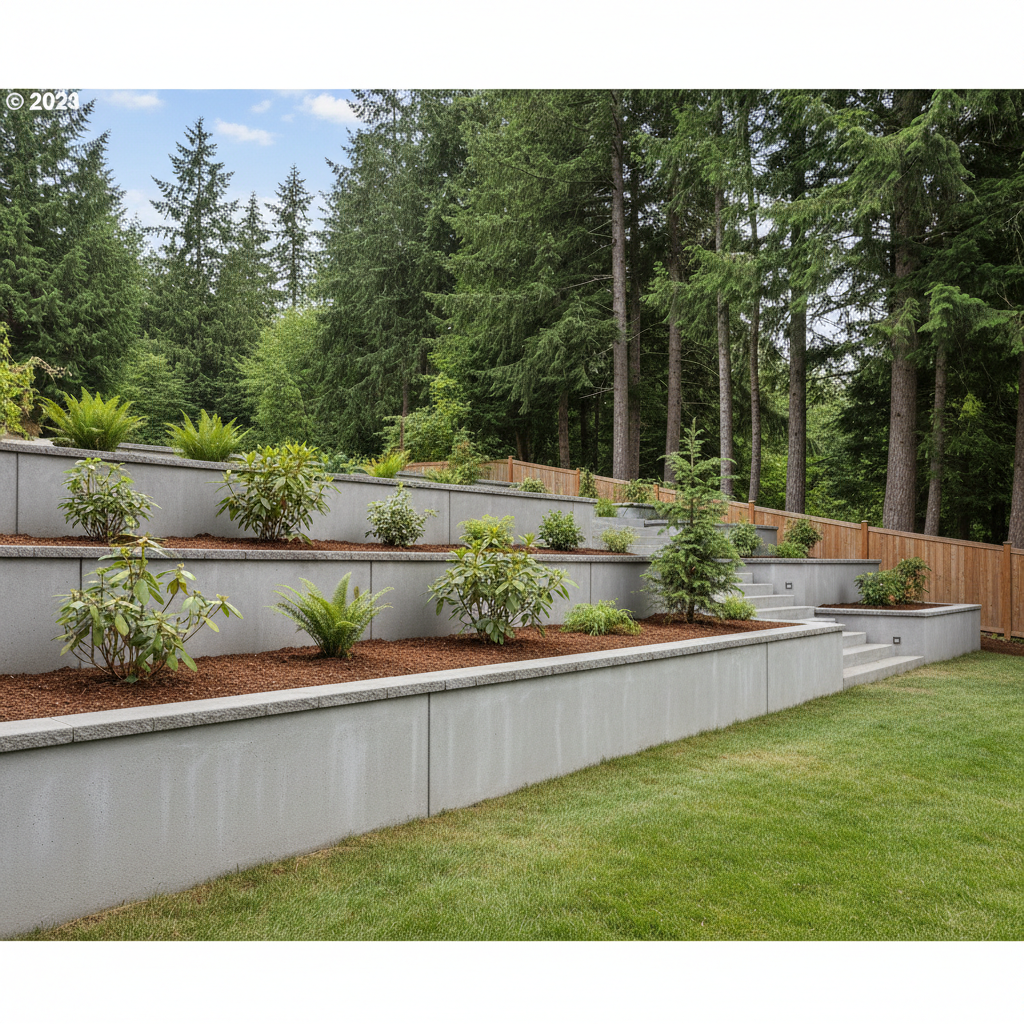
Thinking about putting in a concrete retaining wall? Maybe you want to level out a sloped yard, build a garden bed, or just shore up some eroding soil. Good call. When it's done right, a concrete retaining wall is a tough, long-lasting solution. But I've seen plenty of walls done wrong, and trust me, fixing those mistakes always costs more than getting it right from the start. Here in Kenmore, with our often-hilly lots and heavy winter rains, doing it correctly is even more important. Let's chat about some common mistakes I see people make.
Not Thinking Enough About Drainage
This is probably the biggest one out there. People figure, "Hey, it's a wall, it'll hold back the dirt." And sure, it will – for a bit. But what about all that water? Kenmore gets a ton of rain, especially in winter. If that water can't escape from behind the wall, it builds up hydrostatic pressure. Imagine a giant water balloon pushing against your wall. Eventually, something has to give. You'll start seeing cracks, bulging, or even a complete collapse. It's not a pretty sight, and it's definitely not cheap to fix.
You absolutely need proper drainage behind any retaining wall. That means a good layer of gravel, a perforated drain pipe (what folks often call a French drain), and weep holes or other outlets for the water to get out. Don't let anyone tell you this part is optional. It's not. It's the lifeblood of your retaining wall, really.
Skipping the Engineering and Permits
I get it, permits can be a real headache. But for any retaining wall over a certain height – usually around 3 to 4 feet, depending on Kenmore's local building codes – you're going to need an engineer's stamp and a permit. This isn't just about red tape; it's about making sure things are safe. An engineer will check your soil, figure out how much weight the wall needs to hold, and design it to handle all the forces it'll face. Trying to bypass this step is a huge gamble. If your wall fails and causes damage, you're on the hook, and your insurance might not cover it if you didn't follow the rules.
Some folks try to build a bunch of smaller, tiered walls to avoid hitting that permit height. Sometimes that works out. Other times, if they're too close together and essentially act like one big structure, the city will still demand engineering. It's always best to check with Kenmore's planning department upfront. Don't just assume. Ask them.
Ignoring What's Underfoot (Soil Conditions)
Kenmore has all sorts of soil, everything from sandy loam to heavy clay. What's actually under your feet makes a massive difference in how your retaining wall needs to be built. If your soil is really soft or unstable, you might need a deeper footing, or maybe even a completely different kind of wall. Some spots around Lake Ballinger, for instance, can have softer, wetter soils that need extra care and attention.
A good contractor, like us at Western Concrete Solutions, will always check the soil. If they don't even bring it up, well, that's a red flag. You can't just dig a trench and pour concrete anywhere and expect it to last. The ground it's sitting on is just as crucial as the wall itself.
Picking the Wrong Contractor (or Doing Too Much Yourself)
Look, I'm a big fan of DIY projects. But a retaining wall, especially one that's holding back a lot of earth, isn't usually a weekend job for most homeowners. There's a ton of technical stuff involved: digging, proper compaction, placing rebar, mixing concrete just right, drainage, and getting a good finish. Mess up any of those, and you're looking at trouble down the road.
When you're getting bids, don't just jump at the cheapest price. Ask questions. Do they talk about drainage? Will they mention engineering for taller walls? Are they going to pull permits? Do they actually have experience with retaining walls? Ask for references and *actually call them*. Go see their work. A contractor who gives you a super low bid and doesn't ask about your specific site conditions is probably cutting corners somewhere. And those shortcuts always come back to bite you later, don't they?
Forgetting About Maintenance
Once your wall is in, it's not totally a "set it and forget it" situation. You'll want to keep an eye on it. Make sure those drainage outlets aren't getting plugged up with leaves or dirt. Check for any cracks or shifting. While concrete is incredibly tough, a little bit of preventative maintenance can really help ensure your wall lasts for decades, which it absolutely should.
Building a concrete retaining wall is a big investment in your property. Do your homework, ask the right questions, and don't cut corners on the really critical stuff like drainage and engineering. You'll be glad you did.