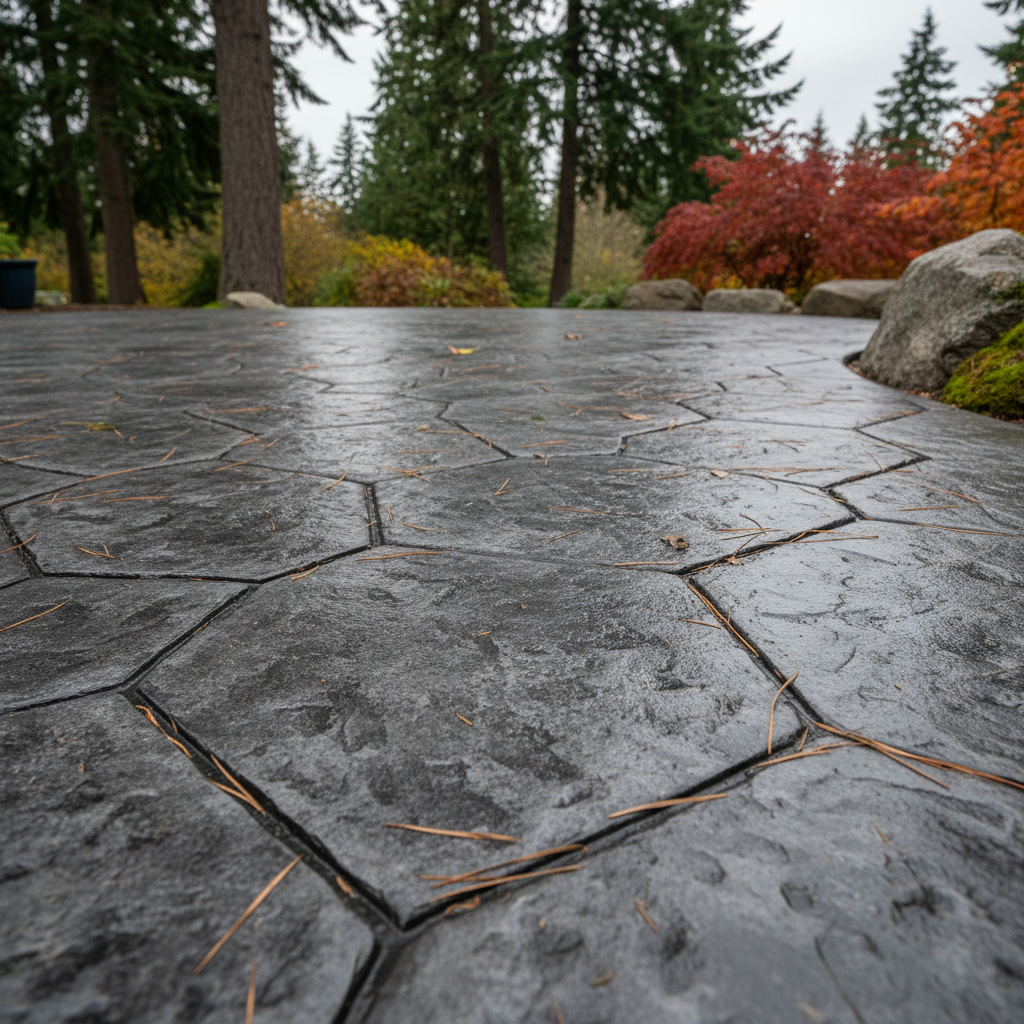
Alright, let's talk stamped concrete. It's a popular choice around here, and for good reason. Folks love the look of stone or brick without the price tag or the installation headaches of individual pavers. But I get a lot of the same questions over and over, so I figured I'd put together a straightforward FAQ for you. No fluff, just the real deal from someone who's been pouring and stamping concrete in Kenmore for years.
What exactly is stamped concrete? Is it just regular concrete with a pattern?
Yeah, pretty much. It's regular concrete, but while it's still wet and workable, we press specialized mats into the surface to create patterns and textures that mimic other materials. Think flagstone, brick, wood planks, even slate. Then, we usually add color, either by mixing it into the concrete itself (integral color) or by broadcasting a color hardener on top, or both. Sometimes we'll even use release agents that add a secondary, contrasting color to give it more depth. It's not just slapping a pattern on; there's a real art to getting it to look natural and hold up.
How long does stamped concrete really last? Is it as durable as plain concrete?
In terms of structural integrity, a well-installed stamped concrete slab is every bit as durable as a plain concrete slab. We're talking decades, easily, if it's done right and maintained properly. The key is proper sub-base preparation, the right concrete mix, and professional installation. Where you might see differences is in the surface. The decorative aspects – the color and the sealer – are what protect it and keep it looking good. If you neglect the sealer, those colors can fade over time, and the surface can become more susceptible to wear. But the concrete itself? That's not going anywhere.
What's the typical cost difference between stamped concrete and regular concrete?
You're gonna pay more for stamped concrete, no two ways about it. It's a more labor-intensive process, requires specialized tools (the stamps themselves aren't cheap), and more skilled craftsmanship. Generally, you can expect stamped concrete to cost anywhere from 50% to 150% more than a basic broom-finish slab. So, if plain concrete is, say, $8-$12 per square foot, stamped might be $12-$25 or even more, depending on the complexity of the pattern, the number of colors, and the overall size of the project. It's an investment, but you're getting a much more aesthetic and customized finish.
Does stamped concrete get slippery, especially here in Kenmore with all our rain?
That's a really good question, and it's a valid concern, especially with our wet winters. A properly sealed stamped concrete surface can be slick, yes. That's why we always recommend adding an anti-slip additive to the sealer. It's usually a fine grit, like sand or a polymer bead, that gets mixed into the final coat of sealer. It doesn't change the look of the concrete, but it adds a subtle texture that significantly improves traction. If you're doing a pool deck or a walkway that gets a lot of foot traffic, especially when wet, this isn't an option; it's a necessity. We always make sure to include it in our Western Concrete Solutions projects around here.
What kind of maintenance does stamped concrete need?
It's not maintenance-free, but it's not high-maintenance either. The biggest thing is resealing. I tell my clients to plan on resealing their stamped concrete every 2-3 years. This protects the color from UV rays, helps prevent staining, and keeps the surface looking fresh. Beyond that, it's just regular cleaning. A good power wash once a year to get rid of moss, mildew, and dirt works wonders. Don't use harsh chemicals; just water and maybe a mild detergent for tough spots. If you've got a lot of trees dropping leaves on it, especially in areas like the Inglewood neighborhood, you'll want to clear those off regularly to prevent staining.
Can you stamp over existing concrete?
Usually, no. Not in the traditional sense of pressing patterns into wet concrete. Stamping requires a fresh, wet slab. What you *can* do is apply a concrete overlay or micro-topping to an existing, structurally sound concrete surface. These overlays are thin layers of polymer-modified concrete that can be stamped, colored, and sealed to create a decorative finish. It's a good option if your existing concrete is in decent shape but you want to upgrade its look without tearing everything out. However, if your existing concrete is cracked, spalled, or has significant structural issues, an overlay won't fix those underlying problems; you'd need to remove and replace it.
What are the most popular patterns and colors people choose in Kenmore?
Around here, I see a lot of demand for patterns that mimic natural stone. Ashlar slate and random flagstone are perennial favorites because they look great with the Pacific Northwest landscape. Cobblestone patterns are also popular for driveways and pathways, giving a classic, European feel. As for colors, people tend to lean towards earth tones – grays, browns, and tans – that blend well with the natural surroundings and the typical home exteriors in our area. We often use a darker base color with a lighter release agent to really bring out the texture and give it that aged, natural look. It really makes a difference.
Will stamped concrete crack?
Look, concrete cracks. It's just what it does. The goal isn't to prevent all cracks, but to control where they happen. We do this by installing control joints (those straight lines you see cut into concrete) at specific intervals. These joints create weak points where the concrete is *designed* to crack, usually in a straight, less noticeable line. With stamped concrete, we try to incorporate these joints into the pattern where possible, or cut them in a way that minimizes their visual impact. A good contractor will always emphasize proper joint placement, adequate thickness, and a strong sub-base to minimize random cracking. If you see a contractor promising zero cracks, they're not being honest with you.
```