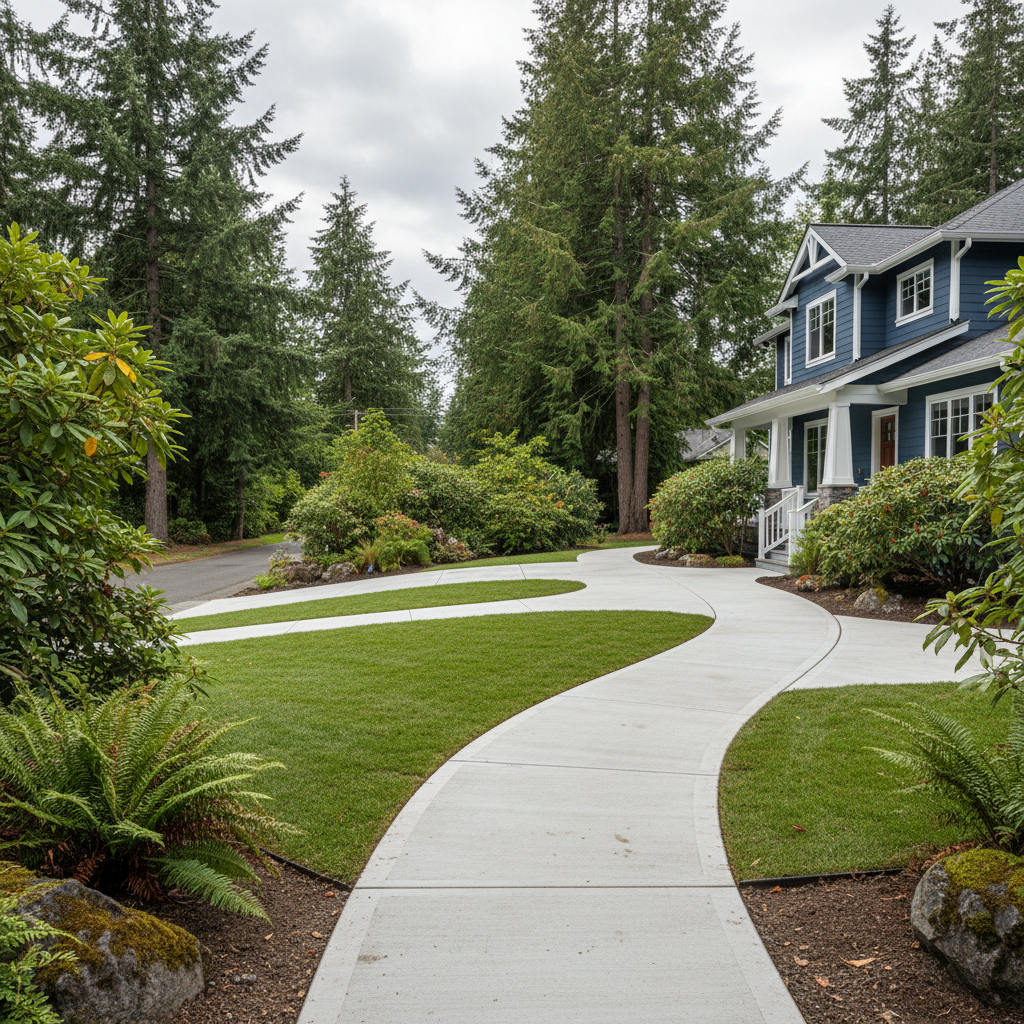
So, you're ready for a new concrete sidewalk. Maybe your old one's cracked up, or you're finally connecting that detached garage to the back door. Whatever the reason, a new sidewalk project isn't something you just wing. It takes some planning to make sure it goes smoothly, stays on budget, and looks great for years.
Setting Your Project Timeline
Let's talk about timing. From your first thought to walking on fresh concrete, you're looking at a few weeks, sometimes more. It's not an overnight job, even for a simple path.
- Initial Research & Quotes (1-3 weeks): You'll want to get a few bids. Don't just take the first one. Talk to contractors, check their references, and make sure they're licensed and insured. Good contractors are busy, so getting them out to your property might take a few days.
- Permits (2-4 weeks, or more): This is a big one. For any exterior concrete work, especially if it's near property lines or public right-of-ways, you'll likely need a permit from the City of Kenmore. Don't skip this. Your contractor should handle the permit application, but it's your responsibility to make sure it's done. Permitting can take a while, so factor that in.
- Scheduling the Work (1-4 weeks out): Once you've got a contractor and permits, you'll get on their schedule. Depending on the season and their current workload, this could be immediate or a few weeks out.
- Construction (2-7 days): The actual pour itself is pretty quick, but there's prep work. Digging, forming, rebar placement, pouring, and then the crucial curing time. For a standard residential sidewalk, the active construction might be 2-3 days, but you'll need to stay off it for at least 3-7 days for initial curing.
All told, from deciding you want a new sidewalk to walking on it, you're probably looking at 6-12 weeks. Patience is a virtue here.
What to Expect During the Process
When the crew shows up, here's the general flow:
- Demolition: If you have an old sidewalk, it's coming out. This can be noisy and dusty. They'll break it up and haul it away.
- Excavation & Grading: They'll dig out the path for your new concrete. This means moving dirt, leveling the base, and ensuring proper drainage. Sometimes, especially with the clay soils we have around Lake Washington, extra base material is needed to prevent future settling.
- Forming: Wood or metal forms will be set up to define the edges of your new sidewalk. This is where the shape and width are locked in.
- Sub-base & Reinforcement: A layer of gravel or crushed rock goes down, compacted well. Then, rebar or wire mesh is laid to give the concrete strength and help prevent cracking.
- The Pour: This is the big day. The concrete truck arrives, and the crew gets to work. They'll pour, spread, screed (level), float, and finish the surface. It's a fast-paced job.
- Curing: Once it's poured and finished, the concrete needs to cure. This is critical for strength. They might spray on a curing compound or cover it. You'll need to keep foot traffic off it for at least a week, and vehicles for even longer, usually 28 days for full strength.
How to Prepare Your Property
Before the crew arrives, do yourself and them a favor:
- Clear the Path: Move any planters, garden gnomes, patio furniture, or anything else that's in the way of the old or new sidewalk.
- Trim Landscaping: If you have bushes or tree branches hanging over the work area, trim them back. This gives the crew room to work and prevents damage to your plants.
- Mark Sprinklers/Utilities: If you know where your sprinkler lines, buried dog fences, or shallow utility lines are, mark them clearly with flags or spray paint. While your contractor will call for utility locates (811), sometimes shallow private lines aren't marked.
- Access: Make sure there's clear access for trucks and equipment. If they're using a wheelbarrow, make sure the path is clear.
- Pets & Kids: Keep them away from the work area. Concrete work is a construction zone, and it's not safe.
Questions to Ask Before You Sign
Don't just sign on the dotted line. Ask these questions:
- What's included in the price? Demolition, hauling, permits, materials, labor, cleanup – get it all itemized.
- How long will the project take, from start to finish? Get a realistic timeframe.
- Who pulls the permits? It should be the contractor. Make sure they show you the approved permit before work starts.
- What kind of concrete mix do you use? For our Kenmore weather, you want a good quality mix, usually 4000 PSI, with air entrainment for freeze-thaw protection.
- What kind of reinforcement? Rebar or wire mesh? What's the spacing?
- What's your warranty? How long is it, and what does it cover?
- How do you handle unforeseen issues? What if they hit an unexpected utility line or discover bad soil?
- What's the payment schedule? Don't pay everything upfront. A reputable contractor like Western Concrete Solutions will usually ask for a deposit, then progress payments, with the final payment due upon satisfactory completion.
- Can I see examples of your previous sidewalk work? Photos are good, but if possible, ask for addresses of local projects you can drive by.
Planning a concrete sidewalk project is a big deal for your home. Taking the time to understand the process and ask the right questions will save you headaches down the road and ensure you get a durable, beautiful sidewalk that adds value to your Kenmore property.